
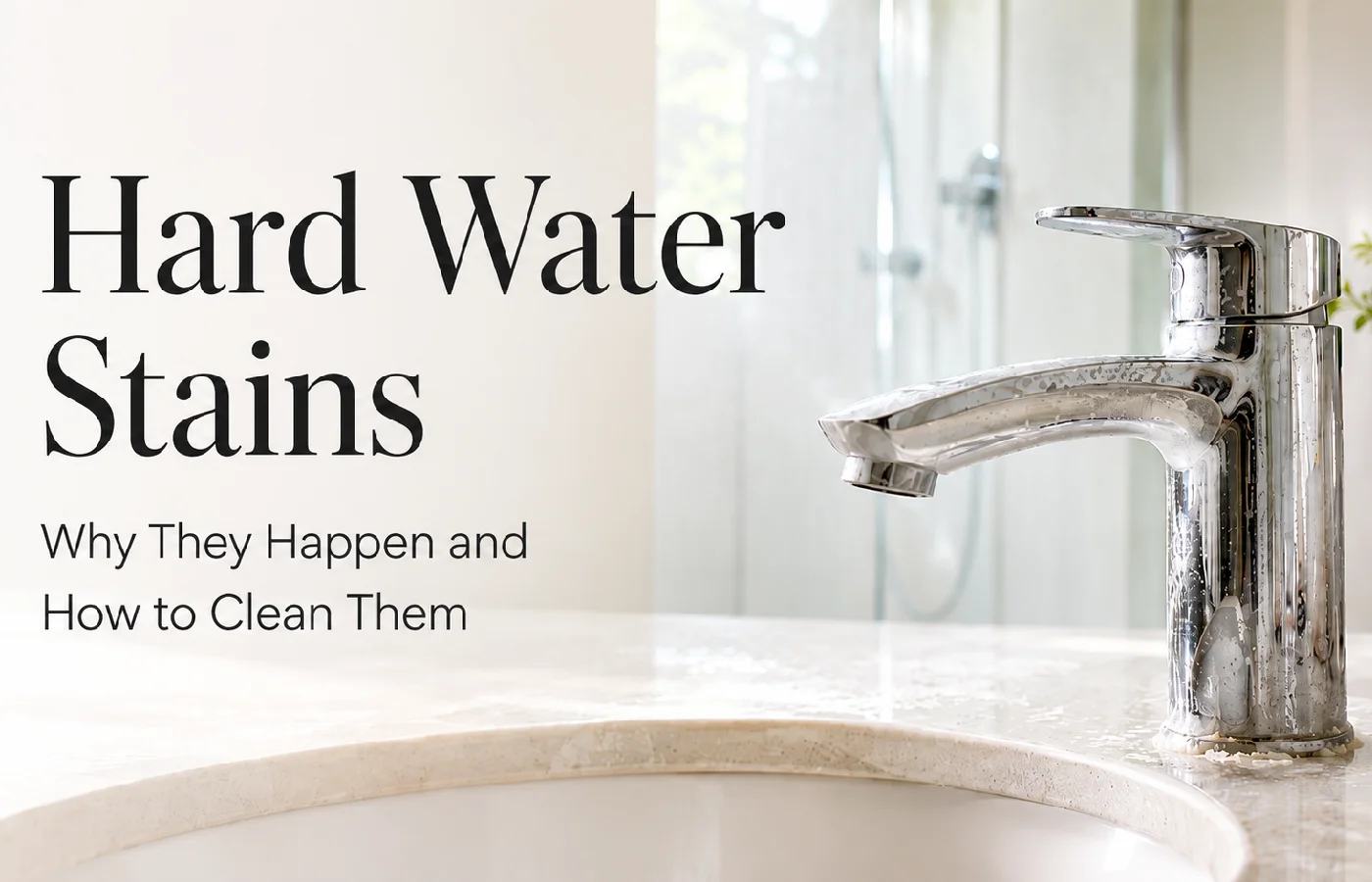
Have you noticed white spots on your dishes, faucets, shower or drinking glass? After you’ve cleaned these surfaces, do they still look crusty or cloudy after you’ve wiped them down? If so, you aren’t alone.
These stains are usually caused by hard water and can be found on glassware and appliances throughout your home, especially in bathrooms and kitchens. Let’s explore the root causes, how to remove hard water stains, and how to prevent them in the future.
What Exactly Are Hard Water Stains?
“Hard” water often contains magnesium, calcium, and other minerals that get left behind when the water evaporates or is wiped away. The result is white spots, cloudy glass, chalky buildup, and crust around fixtures and other surfaces where water has dried.
They are not the same as regular dirt, although they can still be unsightly and leave you feeling like your dishes and surfaces aren’t as clean as they should be after a wash. They’re completely sanitary as they’re mostly made of calcium carbonate and magnesium salts, and won’t endanger your health, but they do make your home look less clean.
Where You’ll Find Hard Water Stains
Although these spots can appear anywhere you use water throughout your home, they’re most commonly found in particular areas or on specific items. Not surprisingly, they tend to be the two places where your home is most likely to have tap water: the kitchen and the bathroom.
In the bathroom, you’ll want to check the shower first, as it naturally uses the most water. You’re most likely to find them on shower doors, tile, inside the tub, drains, and on the showerhead, as water tends to splash about all over while the shower is running. You may also find them on your toilet.
For kitchens, check stainless steel surfaces and appliances, inside your dishwasher, the coffee maker, tea kettles, and all of your glassware. In both locations, they’re likely to appear in sinks, humidifiers, and drains. They might also appear on your laundry if you’re using an older model of washing machine.
You’ll also want to check any other place where tap water is likely to splash or spill onto surfaces. If you clean your car inside the garage with a bucket of tap water, for example, you may have some white spots on the floor. Older homes might also have a sink in the basement.

How to Remove Hard Water Stains
When tackling these stains, you’ll want a soft microfiber cloth, brush, or non-scratch sponge, depending on how severe the stain is. Vinegar works great as a cleaning agent for light buildup or small stains. For larger, tougher spots, you’ll want an over-the-counter hard water cleaner.
Next, apply the cleaner to the affected area and let it sit before you start scrubbing. Strong cleaners shouldn’t sit for too long, as they can work too well and damage the surface. Similarly, rough tools shouldn’t be used on delicate finishes, and you should avoid using vinegar on natural stone.
To remove these stains from inside the dishwasher, remove all other dishes and place a cup of white vinegar face-up in a dishwasher-safe container on the top rack. Run a full cycle with hot water to remove the stains.
Then, remove the container and run a shorter (usually about an hour, depending on your model) cycle with some baking soda on the bottom of the dishwasher to clean, sanitize, and remove the vinegar odour. After the baking soda cycle, remove the dishwasher’s filter, rinse it out, and if there is still any buildup, scrub it with a soft-bristle brush.
To prevent these stains on your dishes, use a microfiber cloth or a towel to finish drying larger items and glassware after they’ve been cleaned. Using a rinse aid as part of the cycle can also be a big help, as it reduces the surface tension of the water and makes it less likely that these stains will stick.
If your laundry has these odd spots, your whites are turning yellow, your towels are too stiff, or your darker fabrics come out with these patches, your washing machine might also be using hard water.
To remove these stains, you can use a stronger detergent (like one made with Borax), purchase cleaning tablets specifically formulated for washing machines, use hot water, or potentially add a second rinse cycle to make sure your clothes always come out looking and feeling as fresh and clean as possible.
How to Prevent Hard Water Stains
The first step in preventing these stains is making sure that they don’t have time to set in. Any water that falls on sinks, counters, or faucets should be wiped up before it gets a chance to dry. Any buildup should be removed before it gets too thick and requires a stronger cleaner to remove it.
Dry fixtures and other surfaces can be wiped with a microfiber cloth. For shower glass, a squeegee works great for removing hard water spots. If you find spots in your dishwasher, you can do a vinegar rinse, use cleaner, or purchase a hard water-specific detergent designed to work better with mineral-rich water.
If you find yourself constantly battling these stains, installing a water softener may help. You can have one installed in your water system that treats the whole house, or you can go with a smaller option, known as a point-of-use water softener, installed in your shower or under a sink.
Battling Hard Water Stains Throughout Your Home
Hard water stains are caused by naturally occurring minerals from your home’s tap water. When fallen water evaporates, these minerals are often left behind in the form of unsightly white spots. Although they’re most commonly found in kitchens and bathrooms, these stains can appear anywhere that water is allowed to dry.
They’re relatively harmless and generally don’t present any health risks, but they look unsightly and can make your home look less clean than it actually is. The easiest way to prevent these stains is to make sure that all fallen water is cleaned up before it has a chance to set in.
If the stains have set in and there’s heavy buildup present, acidic cleaners and a little bit of scrubbing can make your home’s surfaces look as good as new. Don’t forget that laundry and dishes can also be affected by hard water, so you’ll want to regularly clean your washing machine and dishwasher, too.
Get Help With Hard Water Built-Up
If you’re having problems keeping up with hard water stains around your home, UrbanMop can help. With regular cleaning services, we can make it easier to manage hard water buildup around your sinks, faucets, showers, glass, tile, and other high-use areas. If you need help with a one-time deep clean or recurring home cleaning, our professional cleaning services can help make your home easier to maintain. Contact UrbanMop today!